GPL vs Nulled WordPress Plugins: What’s the Difference?
GPL describes software permissions. Nulled usually describes altered package behavior. Compare file origins, disclosed changes and service access before choosing a WordPress download.

Two download pages offer the same premium WordPress plugin. One advertises a “GPL copy”; the other says “nulled, no activation required.” You want the feature, but those labels do not tell you whether the files are identical, which changes were made, or who will help maintain the installation.
The quick answer to GPL vs nulled WordPress plugins is that GPL describes a software license, while “nulled” commonly describes a premium package altered to remove or bypass activation or licensing checks. These are different properties. GPL-covered code can be modified and redistributed under its license conditions. A GPL label alone does not authenticate a download, and a nulled label alone does not prove malware.
A useful comparison separates four questions: what rights cover the code, where the files came from, what changed, and which services you receive. Once you have those answers, you can choose a package for the work your site actually needs.
The difference between GPL and nulled plugins starts with the label
A software license answers a permissions question. It tells you what you may do with the covered code and what conditions apply. A description such as “unchanged,” “modified” or “nulled” answers a different question about a particular copy. It may describe that copy accurately, incompletely or misleadingly.
WordPress itself uses GPLv2 or later. The WordPress project takes the position that plugins and themes are derivative works that inherit the GPL, while acknowledging legal grey areas around what constitutes a derivative work. That position does not establish the license of every asset in every download. Consult the actual package notices. WordPress.org’s licensing page explains the project’s position and its qualification.
“Nulled” has no definition in the GPL. Wordfence uses the term for premium plugins modified to make some premium functionality available without a paid license. Marketplace usage varies, so the seller’s explanation of the changes matters more than the word itself. Wordfence also explicitly states that not every nulled plugin contains malware. Wordfence’s explanation of nulled plugins provides that distinction.
This creates overlap rather than two sealed categories. A changed package might still contain GPL-covered code. An unchanged third-party copy might be a compliant redistribution. Either copy can still need separate services or maintenance. Asking “Is it GPL or nulled?” becomes useful only when you unpack what the source means by each term.
For a broader explanation of software permissions and what a purchase includes, read our guide to GPL WordPress plugins. Here, the focus is identifying the difference between packages offered for download.
Compare what each label tells you
Suppose you are choosing a plugin for a client’s enquiry form. You need the form to work, a way to obtain maintained releases, and a clear explanation of the supplied files. A comparison based only on an activation badge misses most of that decision.
Use the same questions for every source, including the original developer. The table describes what each label can establish; it does not certify any particular seller.
| Dimension | GPL claim | Nulled claim | Evidence that helps you decide |
|---|---|---|---|
| Code permissions | Refers to a license governing covered code | Does not identify the code’s license | Package license, copyright notices and separately licensed components |
| File origin | Does not prove who supplied this copy | Does not identify the original archive or chain of distribution | Identifiable supplier and a documented source for the package |
| Modifications | Can describe original or modified code | Commonly implies activation or licensing behavior was changed | Specific change notes, affected files and an explanation of the change |
| Functionality | Does not guarantee every advertised feature is usable | A removed check does not establish all required functionality | Product documentation and the requirements of your actual workflow |
| Account services | Does not itself include a vendor account or subscription | A changed local status does not establish service entitlement | Provider-confirmed access to the required service |
| Future releases | Does not promise a delivery schedule | Does not explain how later upstream changes will be incorporated | Stated update source, access terms and responsibility for modified code |
| Security | Does not certify the supplied files | Does not diagnose malware by itself | Relevant provenance, maintained releases and proportionate inspection |
Service access often explains why offers with the same product name have different value. A download supplier may provide installation assistance. The original developer may provide product support and an account-connected update channel. A separate hosted service may require its own entitlement. Establish each inclusion explicitly.
Price is also a weak classification tool. GNU’s GPL FAQ permits charging for copies and explains that recipients can obtain copies through other distributors without being required by the GPL to pay the original supplier. A lower price or third-party source does not, by itself, establish that the package is nulled. GNU’s explanation of selling GPL software and its answer about other distributors cover those permissions.
Three downloads, three different explanations
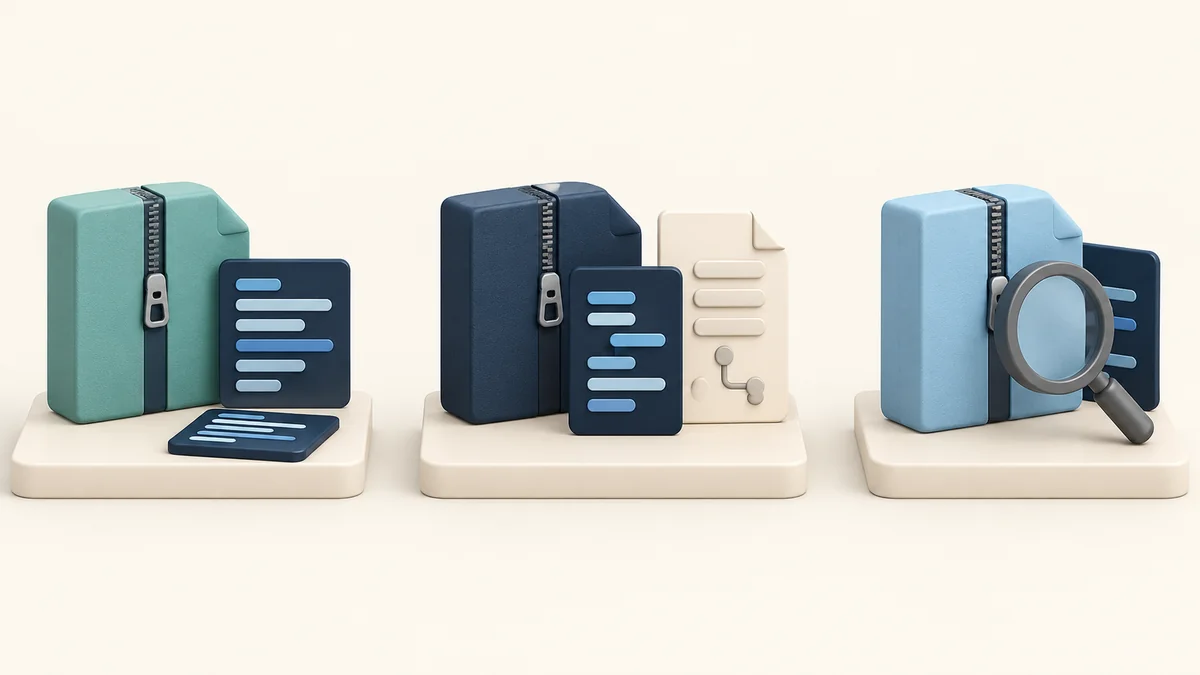
The following are illustrative scenarios, not downloads we tested or claims about named suppliers. Each uses the same imaginary form plugin to show why file history matters.
Download A: an unchanged GPL redistribution
A distributor supplies the plugin with its license notices intact. The listing says the archive is unchanged and explains where the distributor obtained it. It offers access through its own download portal and does not include the developer’s customer account.
This can be a useful arrangement for a project that needs the supplied local functionality and has a workable maintenance route. The remaining questions are specific: what supports the unchanged claim, which components are included, and how will you receive future maintained packages?
The absence of an official account is a service difference. It is not evidence that the files have been altered. Likewise, a license screen asking for credentials does not establish that an otherwise unchanged package is nulled. Record what the download includes rather than assuming the supplier also transfers the original purchaser’s services.
Download B: a documented modified fork
Another distributor makes a compatibility change to the form plugin and maintains a separate fork. Its documentation identifies the changed code, explains the purpose, retains the applicable license notices and describes how it handles upstream changes.
This is modified software, but the modification is not an activation bypass. Calling every changed GPL package “nulled” would obscure the work that was actually done. The practical issue is whether the fork remains suitable for your environment and whether someone owns its maintenance.
A future upstream release may need the compatibility patch reapplied or replaced. Ask who makes that decision and where the resulting package will be available. Documentation makes the change easier to understand; it does not guarantee that the change is correct or that every future conflict has been solved.
Download C: altered activation with unclear provenance
A third listing advertises “premium activated.” It does not explain where the archive came from or what was changed. The local dashboard displays an activated state, but the listing gives no clear answer about vendor services or future releases.
This is the situation where the nulled label often appears. The immediate problem is the missing explanation: which behavior was changed, why, and what still depends on an external account? An activation badge cannot supply those answers.
Do not infer malware solely from the label, or successful service access solely from the badge. Ask for the package’s change history and service scope. If the source cannot explain a dependency your project needs, choose an offer that can. You do not need to resolve every abstract question about redistribution before recognizing that this particular offer leaves a necessary requirement unanswered.
GPL redistribution vs nulled plugins: what modification does and does not mean
GPLv2 permits distribution of original copies and modified versions under conditions. Its provisions include preserving notices and providing the license, marking changed files and the dates of changes, licensing covered modified works under the GPL, and meeting applicable source-code obligations when distributing executable forms. These are real conditions, not a blanket permission to distribute any bundle in any way. See GPLv2, sections 1–3.
That distinction prevents two common mistakes. The first is treating modification itself as proof of a copyright violation. The second is treating a GPL notice as proof that a specific distribution complies with every applicable obligation. The actual license, covered components, changes and manner of distribution matter.
An activation change can affect local behavior, but it does not make an external provider recognize an account entitlement. A plugin might contact a server for templates, processing or updates. The rights to redistribute covered code and the terms for using that server are separate questions.
For a brief product example, Elementor’s terms describe Core and Pro software as GPLv3 and distinguish those software rights from purchased services, including support, updates and template-library access. Receiving a ZIP does not itself transfer those service entitlements. Our Elementor Pro nulled vs GPL comparison covers the product-specific decision.
For your own purchase, turn “fully activated” into a concrete question: can you perform the required task, and what account or service does that task require? The answer may favor an official subscription, a clearly documented redistribution or a different product. The wording on the button is not the deciding evidence.

Security follows the files, not the marketing category
An authentic archive and a maintained archive are also different things. Unchanged upstream files can contain a vulnerability. A modified package can have a legitimate purpose. An unexplained change can leave you unable to assess either its purpose or its effect.
There is a documented reason to take tampering seriously. In a September 2025 investigation, Wordfence researchers analyzed suspicious premium-plugin copies associated with a compromised site and described payloads that could weaken security software and establish persistence. They identified tampered plugins as the most likely initial source in that case. This is evidence of a concrete distribution risk, not a prevalence estimate for all GPL redistributions or all nulled packages. Wordfence’s published investigation gives the details.
For source selection, keep the response proportionate: seek an identifiable supplier, an understandable package history and a credible maintenance route. Comparison against a trustworthy reference can help reveal changes when such a reference is available. A scan or a successful staging installation provides evidence within its scope; neither proves that every harmful change or vulnerability is absent.
The goal at this stage is to decide whether you have enough information to adopt the package. Detailed file inspection and incident response require their own procedures. A catalogue label cannot replace them.
GPL vs nulled WordPress themes: examine the design assets too
The same distinction applies to themes: GPL concerns covered software permissions, while a nulled claim commonly concerns altered package behavior. Themes add another practical layer because the attraction is often a complete demo design rather than a single function.
A theme archive may contain code, images, fonts, icons or demo data. A separate library may supply additional layouts after an account connection. Identify which elements are actually included and what terms cover them before promising a client the appearance shown in a preview.
The WordPress.org theme directory requires GPL-compatible licensing for submitted themes and bundled resources. That is a directory requirement; it does not authenticate an unrelated marketplace ZIP or determine every asset’s terms. The WordPress theme review requirements provide the reference.
The project’s 2009 discussion of theme licensing also published an opinion distinguishing PHP and integrated HTML from potentially separate CSS and images in the themes examined. That historical opinion explains why component distinctions arise; it is not a license determination for your particular download.
For an illustrative portfolio site, you might need only the layout code and use your own photography. For another project, a hosted template collection might be central to delivery. These needs lead to different service decisions even when both offers describe the theme as GPL.
Ask where the final design elements will come from. A removed activation message does not establish permission to use a particular photograph, access to a future template download, or affiliation with the theme author. Checking the supplied assets keeps the comparison tied to the website you intend to build.
Choose the package you can explain and maintain
Before choosing a source, write a short decision record with four answers:
- Rights: Which license and notices cover the code and included assets?
- Origin: Who supplies these files, and what evidence explains their source?
- Changes: Are they unchanged, a documented fork or altered in another way—and who maintains those differences?
- Services: Which required updates, support or hosted features are included, and who provides them?
Then apply those answers to your project. A clearly documented GPL redistribution can offer useful, affordable access when the supplied functionality and maintenance arrangement meet your needs. A maintained fork can fit a requirement that the upstream package does not address. An official developer subscription can be the more practical choice when its services are essential to your workflow.
If an offer leaves the origin, changes or a required service unexplained, resolve that gap before relying on it. Choose by the package and responsibilities you can verify. That is the useful difference behind GPL and nulled labels: understanding what you receive well enough to use it, maintain it and hand it over with confidence.